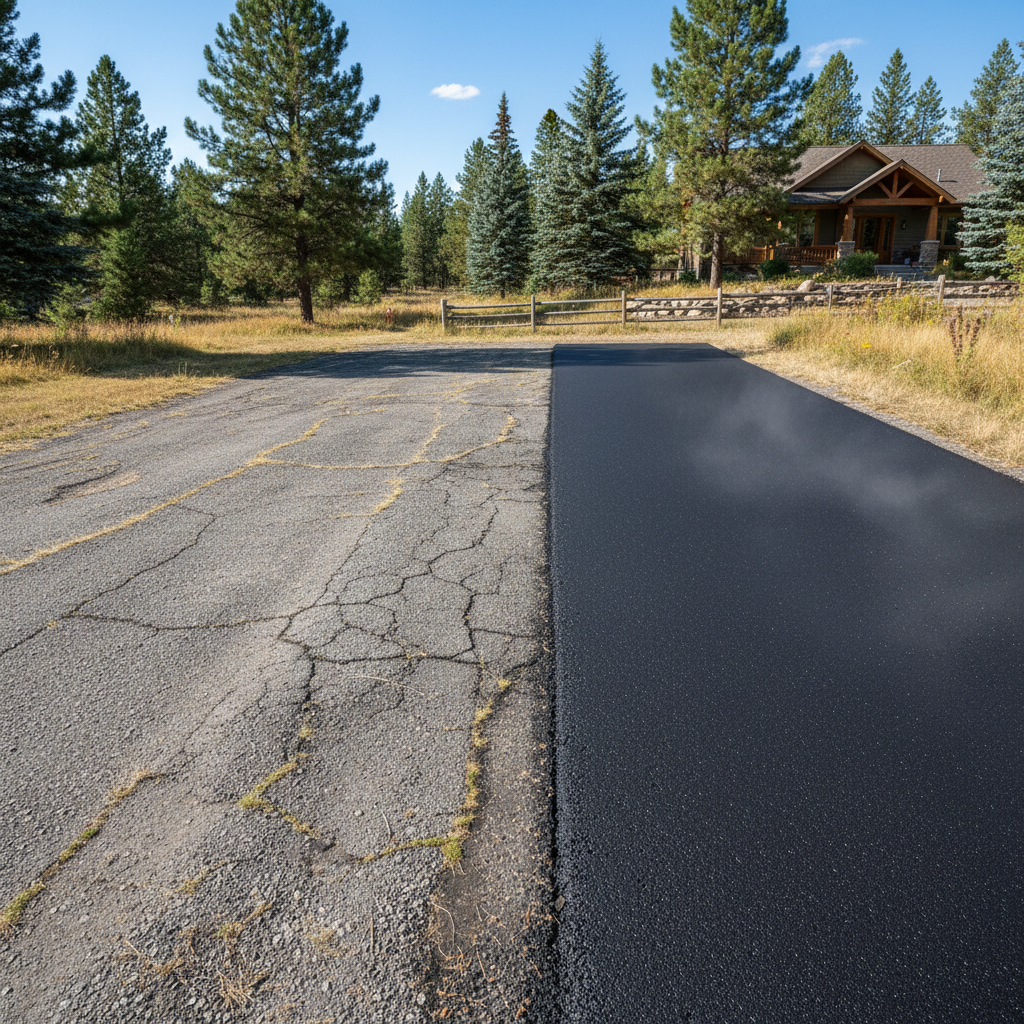
Your asphalt driveway or private road is looking a little tired, huh? Maybe you've got some ugly cracks, a few potholes, or just general wear and tear. It's a common sight around here, especially with our freeze-thaw cycles and heavy snow loads. When it comes to fixing it, you've generally got two main paths: patching up the bad spots or going for a full resurface. I see folks wrestle with this choice all the time, so let's talk about what each option really means for you.
Patching: The Quick Fix
Patching is exactly what it sounds like. We're talking about fixing specific areas of damage – a pothole here, a spiderweb crack there. Usually, we clean out the damaged spot, sometimes cutting it into a neat square, and then fill it with new asphalt. There are a few ways to patch, from simple cold patch (which, honestly, I only recommend for a temporary fix) to more durable hot mix asphalt repairs.
The Good:
- Cost: This is usually the big one. Patching is way cheaper upfront than a full resurface. If you only have a few isolated issues, it's a good way to extend your pavement's life without spending a fortune.
- Speed: It's a much quicker process. We can often get in and out in a day, sometimes just a few hours, depending on the job. Less disruption for you, always a plus.
- Targeted Repair: If 90% of your driveway is still in good shape, why tear it all out? Patching lets you focus just on the problem spots.
The Not-So-Good:
- Appearance: Let's be honest, patches rarely blend perfectly. You'll almost always see the lines where the new asphalt meets the old. It can end up looking a bit like a checkerboard if you have a lot of them.
- Durability: While a hot mix patch can be pretty tough, it's only as good as the pavement around it. If the underlying base is failing, or if new cracks keep popping up nearby, you're just chasing problems. It's not a long-term solution for widespread deterioration.
- Maintenance: You might find yourself needing more patches down the road as other areas start to fail. It can become a never-ending cycle if the pavement is truly old.
Resurfacing: The Fresh Start
Resurfacing, sometimes called an overlay, is a more comprehensive approach. This involves cleaning and prepping your existing asphalt, making any necessary base repairs, and then applying a new layer of hot mix asphalt right over the top of the old one. It's like giving your driveway a brand new skin.
The Good:
- Appearance: This is where resurfacing truly shines. You get a smooth, uniform, brand-new looking surface. It drastically improves your home's curb appeal, which is a big deal if you're thinking about selling down the line, or just want your place to look sharp.
- Durability: A properly installed overlay can add years, even a decade or more, to your driveway's life. It seals up all those old cracks and provides a fresh, strong wearing surface.
- Protection: That new layer protects your existing base from water penetration, which is asphalt's number one enemy, especially in places like Bigfork where we get plenty of moisture and those deep freezes that can really wreak havoc on a compromised surface.
- Value: It's an investment that genuinely adds value and functionality to your property.
The Not-So-Good:
- Cost: No surprise here, it's a bigger investment upfront than patching. You're paying for more material and more labor.
- Time: It takes longer to complete. There's more prep work, more asphalt to lay, and then it needs time to cure before heavy use.
- Not Always Possible: If your asphalt is too far gone – if the base is completely shot, or if there are too many deep, structural cracks – then even an overlay won't fix it. At that point, you're looking at a full remove and replace.
So, What Should You Do?
Here's my take, based on what I've seen over the years with Pacific Asphalt and dealing with our Montana weather. If you've got a few isolated potholes or cracks, and the rest of your driveway is in pretty good shape, patching is a perfectly reasonable and cost-effective solution to keep things safe and functional for a few more years. Think of it as putting a band-aid on a small cut. It works for minor issues.
However, if your asphalt is showing widespread cracking, multiple potholes, significant fading, or just looks tired and worn out across most of its surface, then you really need to consider a resurface. Patching a driveway that's failing everywhere is like trying to fix a leaky boat with a roll of duct tape – you're just delaying the inevitable, and you'll end up spending more in the long run. The cost difference might seem steep initially, but the longevity, durability, and improved appearance you get from a resurface often make it the smarter investment for our climate.
The best thing you can do is have someone who knows what they're looking at come out and give you an honest assessment. We can tell you if your base is still solid enough for an overlay, or if you're past that point. Don't wait until your driveway looks like a patchwork quilt or you're dodging craters every time you pull into your garage. Get it looked at, and we'll help you figure out the right path forward.