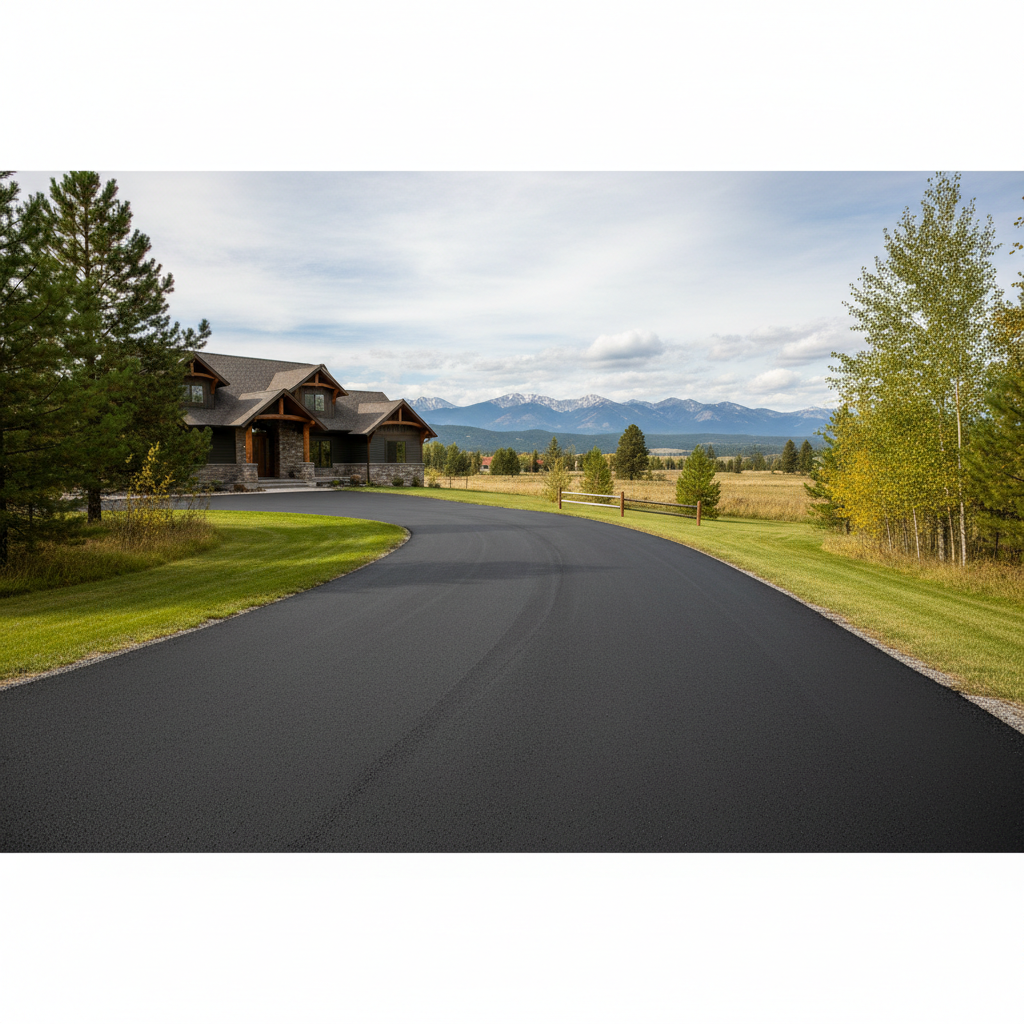
You're looking at your driveway, maybe it's got some small cracks, looks a little faded, and you're thinking, 'Time for a slurry coat.' Good idea. It's a smart way to protect your asphalt and make it last longer, especially with our tough Bigfork winters. But I've seen a lot of folks around here, from Electric Avenue to the Swan River, make some common blunders that turn a simple project into a real headache. Let's talk about what to watch out for.
Mistake #1: Not Prepping the Surface Right (or at all)
This is probably the biggest one. People think you just spray slurry over whatever's there. Nope. Think of it like painting a wall; if you don't clean it, fill the holes, and prime it, that paint isn't going to stick or look good. Your asphalt needs to be clean – I mean really clean. No dirt, no oil spots, no loose gravel. Any cracks need to be filled properly with the right material, not just ignored. If you don't do this, the slurry won't bond, and you'll see it peeling or flaking off in no time. You'll be calling someone like Pacific Asphalt to fix it, and that costs more than doing it right the first time.
Mistake #2: Going for the Cheapest Bid
Look, I get it. Money doesn't grow on trees, especially not around Flathead Lake. But when it comes to asphalt work, the cheapest bid is almost always a red flag. These guys often cut corners. They might use watered-down material, skip crucial prep steps, or just not have the experience to do a quality job. You end up with a coat that wears out fast, looks patchy, or fails completely. Then you're paying someone else to strip it off and reapply, which is a massive waste of your hard-earned cash. Ask for references, check their reviews, and make sure they're properly insured and licensed. A reputable contractor won't be the absolute cheapest, but they'll give you a job that lasts.
Mistake #3: Ignoring Weather Conditions
This is Montana, folks. The weather changes fast. Slurry coating needs specific conditions to cure properly. It can't be too cold, it can't be too hot, and it definitely can't be raining or about to rain. If the ground is too cold, the slurry won't set right. If it's too hot, it can dry too fast and crack. And rain? Forget about it; it'll wash away before it cures. I've seen driveways ruined because someone tried to rush a job when the forecast was iffy. A good contractor will schedule around the weather, even if it means rescheduling a few times. Patience pays off here.
Mistake #4: Not Understanding the Material
There are different types of slurry and sealants out there. Some are better for certain conditions or types of wear. Some homeowners just ask for