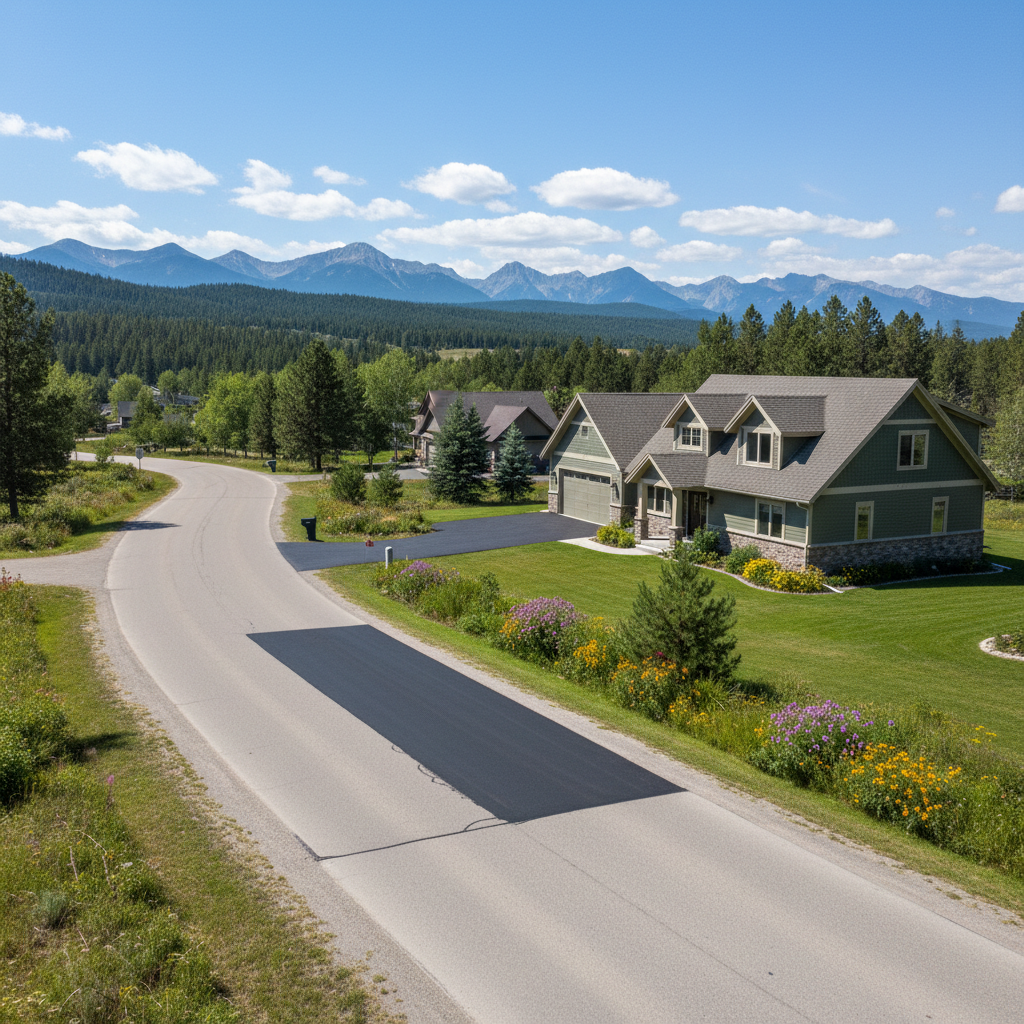
Got a pothole? Or maybe it's just a crack that's decided to spiderweb across your driveway or parking lot. Beyond being an eyesore, it's a trip hazard. And it's a pretty clear sign that water's getting where it absolutely shouldn't. So, what's the plan?
Patching asphalt isn't just about filling a hole, not really. If you've lived in Bigfork for any length of time, you know our weather can be pretty brutal on pavement. Those freeze-thaw cycles we get, especially in places like the Swan River corridor where the ground can get super saturated—they're just merciless. A bad patch job? It'll fail again, sometimes even worse than the original damage. At that point, you're just throwing good money after bad, aren't you?
Why Bigfork's Conditions Demand Smarter Patching
Here's what I've seen over the years, working on properties all around Bigfork, from the busy commercial lots downtown to those long, winding driveways up on Foothill Road. Our soil types can vary wildly, and that plays a huge role in how your asphalt holds up. Some spots drain great; others are sitting on clay that just holds water. When that water gets under your asphalt and freezes, it expands, pushing the pavement up. Then it thaws, leaving a void, and the pavement collapses. That's how most potholes start, plain and simple.
Then there's the traffic. A residential driveway in a quiet neighborhood, maybe near Flathead Lake Lodge, isn't going to see the same abuse as, say, the entrance to a busy restaurant or a marina's parking lot. The kind of patch you need has to stand up to the expected load. Makes sense, right?
The Right Patch for the Job: Not One-Size-Fits-All
When we talk about patching, there are a few main ways to go about it. Choosing the right one is absolutely critical for a repair that actually lasts.
- Skin Patching: This is basically laying a thin layer of new asphalt right over the damaged area. It's quick, sure, and cheap, but honestly, it's usually just a temporary fix. It doesn't actually address the underlying problem, and it's prone to failing quickly, especially with our temperature swings. I'll tell you straight: I don't recommend this for anything more than a very minor, surface-level issue that you just need to get through the season with.
- Saw Cut & Remove (Full-Depth Repair): This is the gold standard for potholes and larger, isolated areas of damage. We cut out the entire damaged section, right down to the base, remove all the old material, prepare the sub-base, and then lay new hot asphalt. This gets rid of the problem completely and gives you a much stronger, longer-lasting repair. It's more involved, but it's the right way to fix a real problem, no shortcuts.
- Infrared Patching: This is a pretty neat technique for certain kinds of repairs, especially when you want to blend new asphalt seamlessly with old. We use infrared heat to soften the existing asphalt around the damaged area, add new material, and then compact it all together. It creates a thermal bond, which means fewer seams for water to get into. It's great for things like utility cuts or areas where you really want a super smooth transition.
Why Local Expertise Matters for Your Bigfork Property
You can call any paving company, but do they *really* understand Bigfork? Do they know about the drainage issues specific to the valley floor? Or the heavy snow loads we get that can truly stress pavement? At Pacific Asphalt, we've been doing this here for a long time. We've seen what works and what doesn't in our unique environment.
We're not just patching a hole; we're figuring out why that hole formed in the first place. Sometimes it's a drainage issue, sometimes it's a weak base, sometimes it's just plain old age. Understanding the root cause means we can recommend a repair that actually solves your problem, not just covers it up. You want a patch that's going to hold up through another Bigfork winter and spring, not one that'll pop out the first time the snow melts.
Don't wait until a small crack turns into a crater. Get it looked at by someone who knows our area. It'll save you headaches and money down the road, trust me.